
Traders need to seek registration for rice storage by 26 June

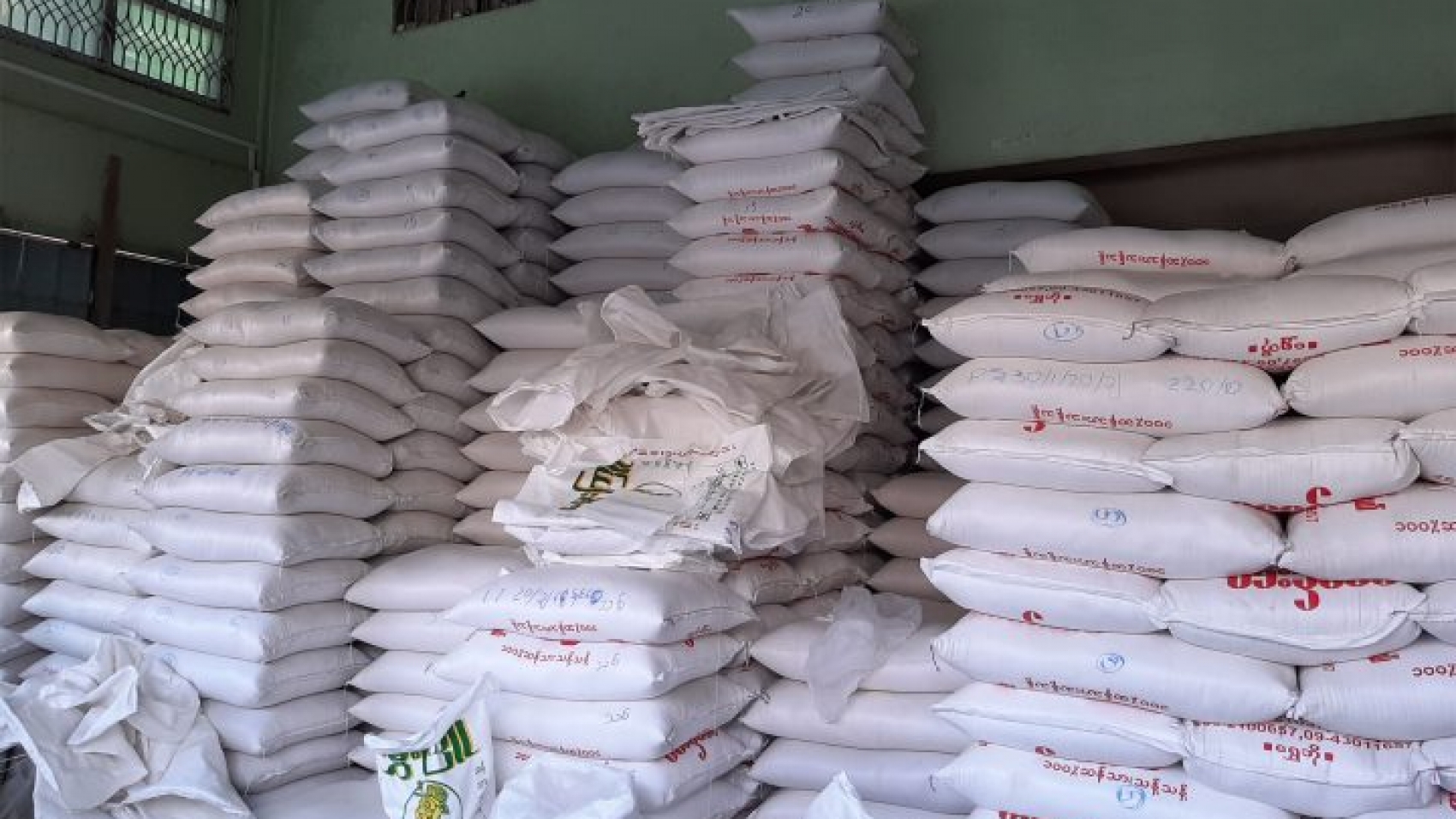
The wholesalers are required to submit registration for rice storage for above 5,000 baskets of paddy and 1,000 rice bags (over 50 tonnes) by 26 June 2023 at the latest, Myanmar Rice Federation released a notification on 21 June.
Under the guidance of the Ministry of Commerce, MRF has been making efforts and participating in the development of the rice market, systematic registration for rice storage, fair market and price stability as the role of the private sector.
MRF stated that digital registration service through Online registration (MyRO) is underway to facilitate the registration process.
While the MyRO online registration system is being set up, trial operations of warehouse storage situations will be conducted in Nay Pyi Taw Union Territory, Yangon, Ayeyawady, Bago and Mandalay regions in June and July 2023. The MRF asked those traders to submit a complete registration form by 26 June 2023 at the latest through export@mrf.com.mm/ or Viber No 09.400067240 or to the office of the MRF in person.
The traders must create a warehouse inventory list to track the stocks. The Department of Consumer Affairs and the MRF will go on an inspection tour of the warehouses as a public-private partnership.
The companies are also notified to fill in the registration form according to the stock information of their business partners (millers and rice traders) in other regions.
Those traders who store above 5,000 baskets of paddy and 1,000 rice bags (over 50 tonnes) are included in this registration. Those farmers working on a small scale and the retailers holding hundreds of rice bags in their hands are not entitled to this notification, a rice seller highlighted. The administrative committee of the MRF also notified that trial operations to collect the warehouse storage data are free of charge. 

Source: The Global New Light of Myanmar
When applying for an import license from the Chinese border, You must present the account balance (RMB) purchased from a local bank

When applying for an import license from the Chinese border, either from export earnings or The Foreign Exchange Supervisory Committee has decided that the balance of the account (RMB) purchased from a local bank must be presented.

whether by sea or Obtaining a license for goods to be imported from the border or from abroad and paying from local banks or To allow payment only through the bank transfer system, either from export earnings or by purchase. When applying for an import license from the Chinese border, either from export earnings or It was decided in the meeting number (41/2023) of the Foreign Exchange Supervisory Committee to submit a bank statement showing the balance of the account (RMB) purchased from a local bank.

In the third quarter of the fiscal year 2022-2023, the five countries that imported the most imports to Myanmar were China, Singapore Thailand According to the Central Statistics Association, Malaysia and Indonesia are in the same order.

In the third quarter of the fiscal year 2022-2023, among the five countries that imported the most goods to Myanmar, China accounted for $1,537.89 million; Singapore $1,147.21 million; Thailand 543.13 million dollars; Malaysia, $237.11 million; Indonesia ranks first with $229.908 million.

In the fiscal year 2020-2021, China is among the 10 countries that import the most imports to Myanmar, more than 4647 million dollars. According to the Ministry of Economy and Commerce, Singapore has more than 2604 million dollars and Thailand has more than 1980 million dollars.

From October to the end of September in the fiscal year 2020-2021, the countries that imported the most goods to Myanmar were China, Singapore Thailand Indonesia, Malaysia, India South Korea Vietnam Japan and the United States.

In the fiscal year 2020-2021, the largest import to Myanmar was from China with 4647.10 million dollars, from Singapore with 2604.22 million dollars. 1980.89 million dollars from Thailand; 1164.51 million from Indonesia; 787.34 million dollars from Malaysia, 386.54 million dollars from India. $376.85 million from South Korea; 58 million from Vietnam; According to the Ministry of Economy and Commerce, 352.46 million dollars were imported from Japan and 227.32 million dollars from the United States.

Source: Daily Eleven

Myanmar-Thailand border trade crosses US$390 mln in April 2023-2024

Myanmar’s border trade with the neighbouring country, Thailand, totalled US$393.233 million in April during the current financial year 2023-2024.
The figures surged from $329.046 million recorded in the year-ago period, showing a significant increase of $64.187 million.
Myanmar carries out cross-border trade with Thailand via Tachilek, Myawady, Kawthoung, Myeik, Hteekhee and Mawtaung borders. Among them, the Hteekhee border performed the largest trade worth $273.366 million last month.
The trade values stood at $97.113 million at Myawady border post, $12.986 million at Tachilek, $7.189 million at Myeik, $2.491 million at Kawthoung and $0.088 million at Mawtaung.
Myanmar conducts border trade with the neighbouring countries China, Thailand, Bangladesh and India. It exports agricultural products, livestock products, fisheries, minerals, forest products, finished industrial goods and other goods, while it brings in capital goods, intermediate goods, consumer goods and raw materials by the CMP enterprises.
Thailand’s demand for Myanmar’s kitchen groceries (onion, rice powder, chilli pepper) has risen as it resumed the tourism businesses in the post-COVID period and the restaurants and food businesses widely used them.
Fishery products are directly sent to Bangkok, Thailand through Maesot. The fast and fresh delivery service is the priority. There is a timely transport arrangement for perishable green items like onions, chilli pepper and cabbage at the border.
The cloth roll, construction materials, industrial raw materials, pharmaceuticals, motorcycle parts, footwear, clothes, fruits, food products, cosmetics, gas, lubricants, household goods, feedstuff, bicycles, stationery, auto parts, tiles, feedstuff, fertilizer and electronic devices are imported. 

Source: The Global New Light of Myanmar
Myanmar foreign trade crosses US$1 bln as of 21 April

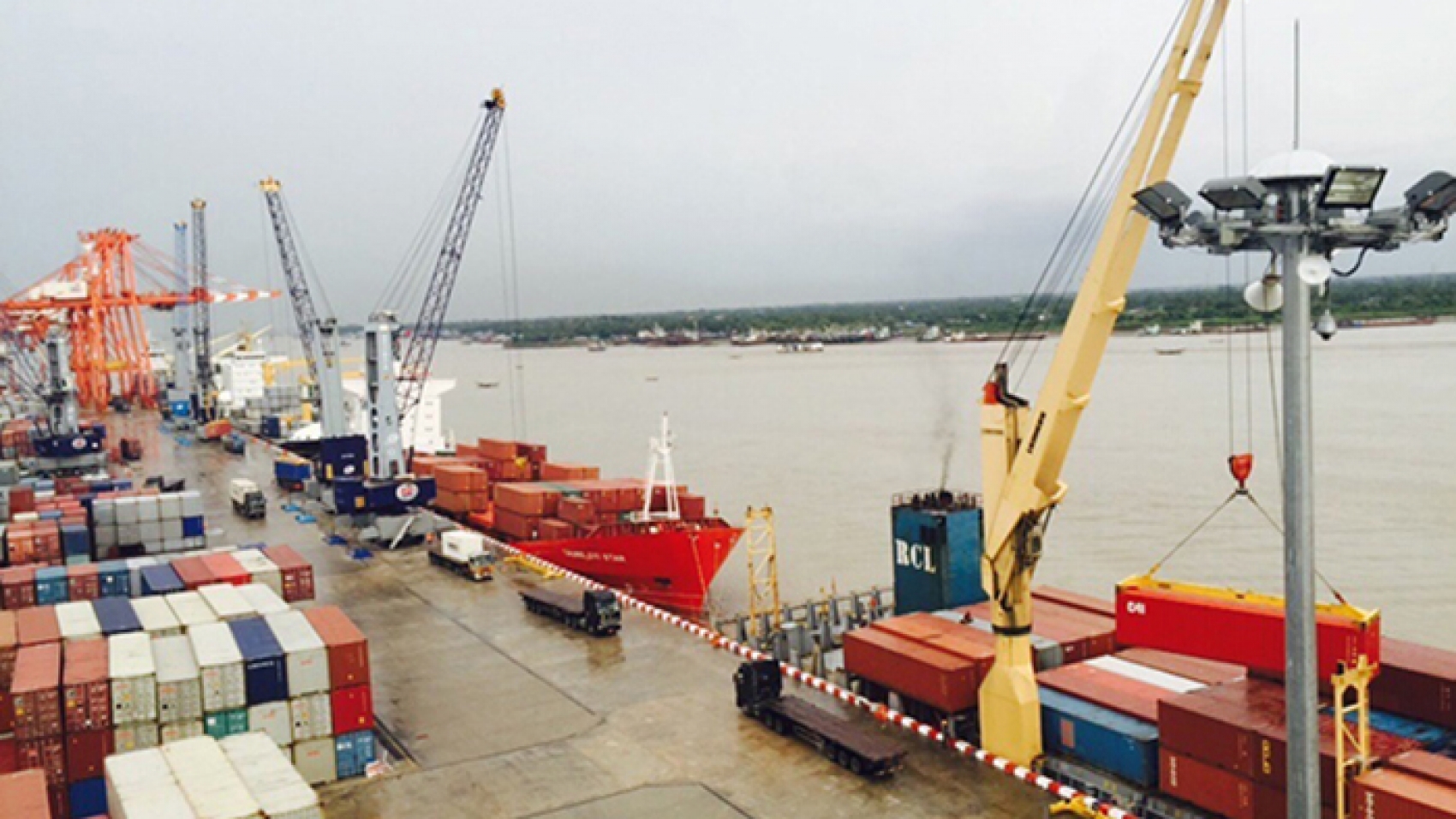
Myanmar’s trade with foreign trade partners increased to US$1.625 billion as of 21 April in the financial year 2023-2024 from $1.536 million recorded in the year-ago period, the Ministry of Commerce’s statistics showed.
Myanmar’s export was worth over $606.67 million whereas the country’s import was valued at $1.018 billion between 1 and 24 April. With border posts between Myanmar and China resuming, the border trade bounced back to $503.89 million, showing an increase of $210.3 million as against the year-ago period. Similarly, Myanmar’s seaborne trade amounted to over $1.1 billion in the FY2022-2023, indicating a sharp drop of $121.89 million from the year-ago period.
Myanmar exports agricultural products, animal products, minerals, forest products, and finished industrial goods, while it imports capital goods, raw industrial materials, and consumer goods.
The country’s export sector relies more on the agricultural and manufacturing sectors. The Ministry of Commerce is focusing on reducing trade deficit, export promotion, import substitution and market diversification.
The external trade tremendously grew to US$33.9 billion last Financial Year 2022-2023 (April-March), according to the Ministry of Commerce. The figures surged from $30.35 billion in the corresponding period of FY 2021-2022. The external trade stood at $15.5 billion in the past mini-budget 2021-2022 (October-March) period and $29.58 billion in the 2020-2021 FY, as per the Commerce Ministry’s statistics.

Source: The Global New Light of Myanmar

Border trade tops US$8 bln in 2022-2023 FY

Myanmar’s border trade totalled US$8.57 billion in the 2022-2023 financial year. Myanmar’s exports outperformed imports in border trade, with the exports worth $6.086 billion and imports valued at $2.484 billion, according to the Ministry of Commerce.
The value of border trade was estimated at $7.75 billion in the FY 2021-2022, including exports worth $5.413 billion and imports valued at $2.338 billion.
The figures showed an increase of $818.268 million in the FY2022-2023 compared to that recorded in the FY 2021-2022.
Myanmar conducts cross-border trade with neighbouring countries (China, Thailand, Bangladesh and India). Of them, Thailand was ranked first with exports worth $3.479 billion and imports worth $1.876 billion. China was placed second in border trade with exports worth $2.5 billion and imports worth $561.938 million.
Myanmar exports agricultural products, livestock products, fishery products, minerals, forest products, manufacturing goods and other goods to the neighbouring countries.
Myanmar imports capital goods, consumer goods, intermediate goods and raw materials from the CMP enterprises. 

Source: The Global New Light of Myanmar

Myanmar pockets over $700 mln from fishery exports in FY2022-2023

Myanmar generated an income of US$765.947 million from fishery exports between 1 April 2022 and 31 March 2023 in the 2022-2023 Financial Year, according to the Ministry of Commerce.
The figures dropped from $824.513 million in the 2021-2022 FY, showing a decrease of $58.566 million.
Myanmar sends fishery products to foreign markets by sea and border trade.
At present, fishery export is underway. The export volume is still declining.
Myanmar’s fishery products are delivered to Japan, European countries, China, Thailand and neighbouring countries by maritime trade. Fish, shrimp, crab and fishery products are sent to neighbouring countries through Muse, Myawady, Kawthoung, Sittway, Myeik and Maungtaw borders.
More than 20 fish species including hilsa, rohu, catfish, and seabass are exported to foreign markets, according to the Myanmar Fisheries Federation.
Myanmar ships fishery products to over 40 countries, mostly to Thailand and China. 

Source: The Global New Light of Myanmar

MoC: over 10,000 commodities lines compulsory for export/import licences

The Ministry of Commerce made over 10,000 commodities lines mandatory for export/import licences.
The MoC released this directive dated 31 March, in the exercise of the power conferred by Section 4 (C) and Section 13 (B) of the Export and Import Law. According to Notification 84/2022 dated 12 October, under the Customs Tariff of Myanmar 2022, 1,556 commodities lines with 10 digits HS Code for export and 8,774 for import are required to be applied for export/import licences on the Myanmar TradeNet 2.0 portal.

Only after traders of those items have received a licence first in line with the export/import regulations through the non-automatic licencing process, the shipment by air, sea and road will be given the green light. This directive came into effect starting on 1 April. It is an amendment of directive 51/2020 dated 8 July 2020. Similarly, directive 32/2022 dated 2 May 2022 was cancelled with this amendment incorporated.

Those who have sought export and import licence and permits on TradeNet 2.0 platform through TradeNet 2.0 system are mandatory to withdraw licences within set periods and they will be fined for late withdrawal, the Trade Department under the Ministry of Commerce released Notification 5/2023 dated 27 February. The licence applicants need to make payment and withdraw the licence within seven days of approval by the department. Those who fail to do so will be cancelled automatically, according to the Export/Import Notification 4/2022.

However, the timeline for striking off from the system will be changed to three months instead of seven days. In addition to licence fees, fines are to be paid K45,000 for eight to 14 days, K90,000 for 15 to 30 days, K180,000 for two months and K360,000 for third months. During the auto cancellation period for licence/permit processing, the applicants will have their licence temporarily suspended for six months if they fail five times in three months, Notification (20/2020). Exporters and importers are therefore suggested to withdraw their licences within seven days. Auto cancellation of licence seeking process and temporary suspension of licence commenced from 1 March, the Trade Department stated. 

Source: The Global New Light of Myanmar

20200203_142425-NS-720x477

Rice price move upwards in domestic market

The prices of rice that are mainly consumed locally continued to rise, according to the Wahdan Rice Wholesale Centre. At the end of March 2023, Pawsan rice prices moved in the range between K72,000 and K90,000 per bag depending on the producing areas (Shwebo, Myaungmya, Dedaye, Pyapon and Pathein).

Meanwhile, the prices stood at K77,000 per bag for Kyapyan, K64,500 for Khunni, K54,000 for Ngasein, K59,000 for short-mature rice (90 days), K54,000 for Emahta, K65,000 for Pawkywe and K53,000 for rice grown under intercropping season. The prices of Pawsan rice climbed up to K75,000-93,000 per bag on 3 April. The prices of various rice varieties were up by K1,000-3,000 per bag within three days.

An increase in paddy prices drove rice prices up. Starting from 3 August 2022, Myanmar Rice Federation, Myanmar Rice Producers and Planters Association, Myanmar Rice Millers Association, and traders and brokers engaged in Wahdan Rice Wholesale Centre and Bayintnaung Rice Wholesale Centre have been working together to offer fair prices for Shwebo Pawsan from K75,000-77,000 per bag and other rice varieties to the consumers at the Wahdan Wholesale Centre.

The offer prices are K52,000-55,000 per bag of Pawsan from the Ayeyawady area, K55,000-60,000 per bag of Kyapyan, and K35,000-37,000 per bag of short-mature rice varieties (90 days) at the Wahdan Rice Wholesale Centre. Each household can buy only one bag. Those traders and retailers are not entitled to buy them.

Source: The Global New Light of Myanmar

Service fees for trademark registration applications defined

In accordance with the trademark law, the fees to be paid according to the types of service related to the trademark registration application were published on 1 April. According to sub-section (j) of Section 8 of the Trademark Law, the fees to be paid for the type of service in connection with the application for trademark registration in line with the agreement of the Union Government are: K150,000 for the examination of acceptance of trademark registration application (TM-1), K100,000 for the review of reinstatement of an application due to failure of prescribed rules (TM-3) and K50,000 for the amendment of request for correction of error in an application (TM-4).

In addition, K50,000 for the request to limit the list of goods/services in an application (TM-6), K100,000 for the request to divide an application for registration (TM-7), K150,000 for the application to oppose a trademark application (TM-8), K50,000 for the request for certified copy of registration certificate (TM-9), and K50,000 for the request for amendment of registration of a trademark (TM-10), will be charged.

Furthermore, K300,000 for the application for renewal of trademark registration (TM-11), K100,000 for the application to register a transfer of ownership (TM-12), K100,000 for the application to register a licence of trademark (TM-13), K150,000 for the application for invalidation of a registered trademark (TM-15), K100,000 for the application for cancellation of a registered trademark (TM-16), K20,000 for the request for change of representative or agent (TM-17), K50,000 for the request for extension of time (TM-18), and K500,000 for the application for appeal (TM-19) must be paid. It is announced that the fees for the types of services related to trademark registration applications will be revised and published from time to time. 

Source: The Global New Light of Myanmar

myanmar industrial port yangon 1

Myanmar registers trade deficit of over $754 mln over past 11 and half months

Myanmar’s trade gap widened to over US$754 million between 1 April and 17 March of the current financial year 2022-2023 compared to the year-ago period. Higher exports and lower imports resulted in a trade surplus of $524 million in the corresponding period of the 2021-2022 FY, according to data provided by the Ministry of Commerce. While exports were estimated at $15.95 billion, imports were valued relatively low at $16.7 billion over the past 11 and half months. Compared to the FY 2021-2022, exports showed an increase of over $1.368 billion, while import value was up by $2.647 billion. 

Myanmar aimed to achieve an export target of $15.5 billion and an import target of $14 billion for the 2022-2023 FY, totalling U$29.5 billion, according to the 2022-2023 Financial Year Budget. Myanmar’s external trade this year amounted to $32.659 billion as of 17 March this FY, which soared from $28.642 billion. The figures indicated a sharp rise of over $4 billion compared to the year-ago period. Myanmar’s maritime trade value edged up to $24.48 billion this FY from $21.359 billion recorded in the same period last year.

Similarly, the country witnessed an increase of $894.75 million in border trade as the cross-border posts with the main trade partner China was reopened. Myanmar exports agricultural products, animal products, minerals, forest products, and finished industrial goods, while it imports capital goods, raw industrial materials, and consumer goods. The country’s export sector relies more on the agricultural and manufacturing sectors. The Ministry of Commerce is trying to reduce the trade deficit by screening luxury import items and boosting exports. The country mainly imports essential goods, construction materials, capital goods, hygienic materials and supporting products for export promotion and import substitution. 

Source: The Global New Light of Myanmar