kbz-takes-yangon-port-operator-to-court-over-massive-debts-1582172550-1024x682

Myanmar foreign trade sees drastic drop this FY

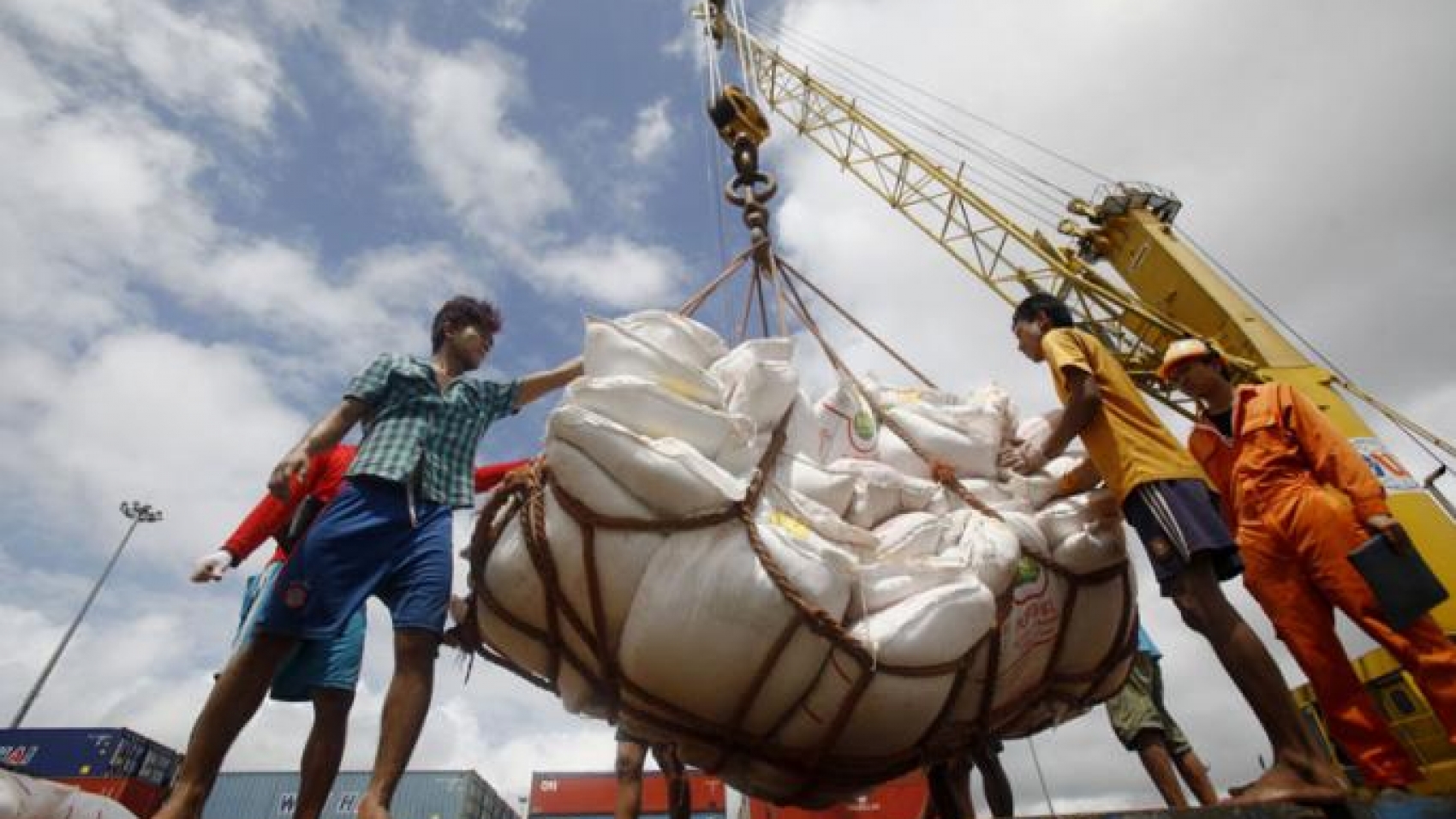
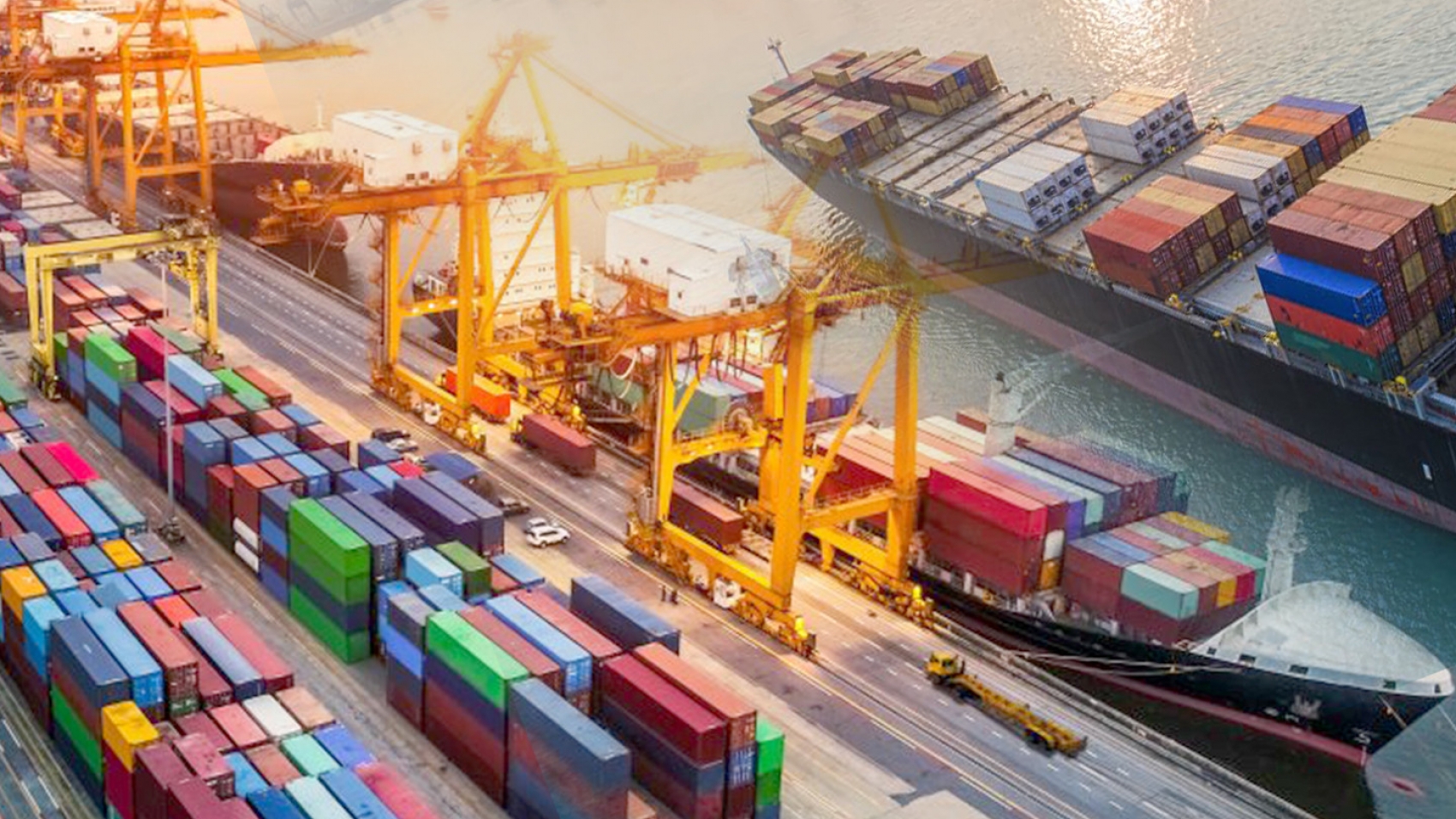
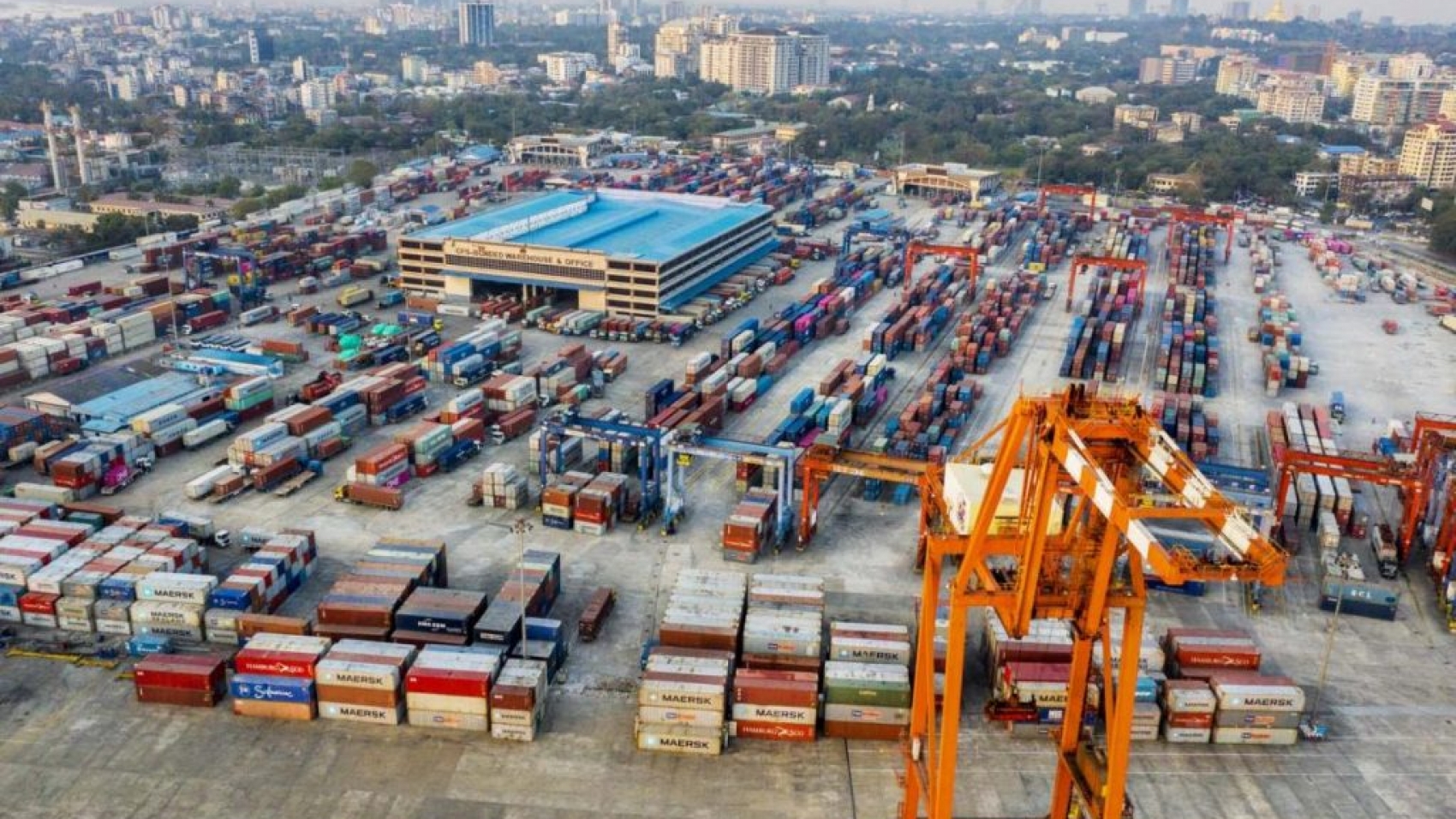
Myanmar’s external trade between 1 October and 17 September in the current financial year 2020-2021 sank 21 per cent as against the year-ago period, the Ministry of Commerce’s data showed. The country’s foreign trade exceeded US$28 billion over ten and a half months, whereas the international trade stood at over $35.75 billion in the corresponding period of last FY, according to the data released by the ministry. During the past ten months, Myanmar’s export was worth over $14 billion whereas, the country’s import was relatively low at $14.1 billion.

Both maritime trade and border trade dropped amid the coronavirus impacts. The neighbouring countries tightened the border security and the border posts came to an abrupt stop amid the COVID-19 surging in Myanmar. At present, the traders have transaction problems triggered by the restriction of the private banks. Furthermore, the pandemic triggered the cargo shipping crisis, a market observer shared his opinion. Myanmar exports agricultural products, animal products, minerals, forest products, and finished industrial goods, while it imports capital goods, raw industrial materials, and consumer goods.

The country’s export sector relies much on the agricultural and manufacturing sectors. However, the suspended trade in the border checkpoints and the order cancellation from the western countries amid the political changes exacerbate the export sector for now. The Ministry of Commerce is focusing on reducing the trade deficit, export promotion and market diversification. The external trade stood at $36.73 billion in the 2019-2020FY, $35.147 billion in the 2018-2019FY, $18.728 billion in the 2018 six month interim period, $33.578 billion in the 2017-2018FY and $29.209 billion in the 2016-2017FY, respectively, as per the Commerce Ministry’s statistics.

Source: The Global New Light of Myanmar

T24-07-16-1

Thailand to reopen special temporary border checkpoint Prachuap Khiri Khan on Thai-Myanmar border on October 1

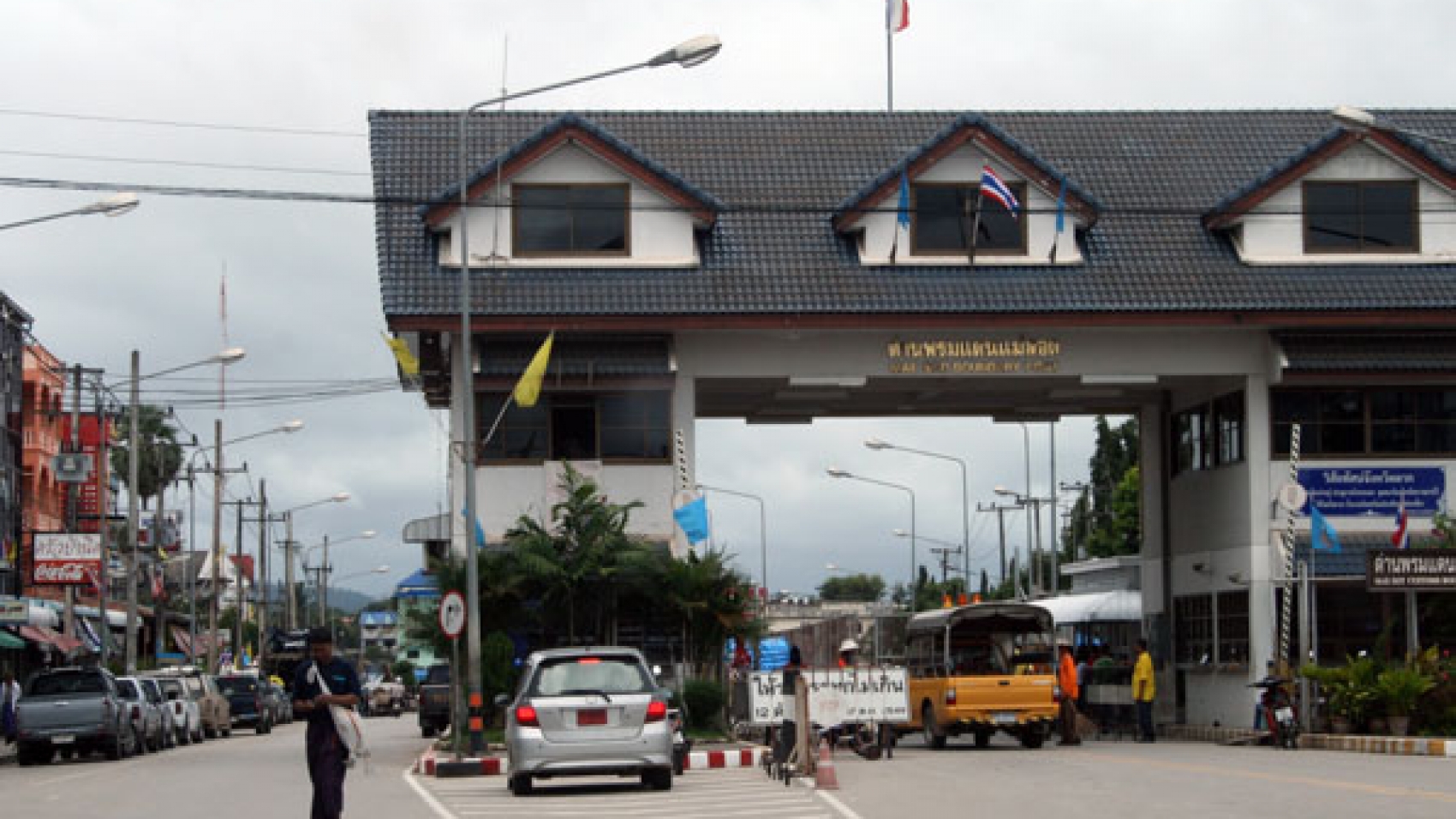
Traders say the Thai-Myanmar special temporary border checkpoint at Prachuap Khiri Khan will be reopened on October 1. Myeik District, Tanintharyi Region The Thai side is planning to reopen the Sin Khun border gate in Prachuap Khiri Khan province, which trades with Mawtaung border in Tanintharyi Township, after the end of this month. Sources in Thailand say the trade-restricted gateway will be reopened due to the COVID-19 epidemic.

Currently, seafood can only be shipped after making ice cubes according to the traders. They cannot export frozen or fresh seafood. The economy is in a slump due to the epidemic and political situations. The Thai side is monitoring the situation in Myanmar and is reportedly planning to reopen the border gate as the rate of infection is declining, said a Mawtaung-Sinkhun border trader. Border crossings at the Mawtaung-Sinkhun checkpoint have been frequently closed due to illnesses on the Thai side.

The Thongkha-Mawtaung section of the road has been upgraded to boost border trade through the Mawtaung-Singun gate. However, border trade has not been as strong as expected, and car traffic has been low. Mawtaung Road will be important if trade recovers. It is only a few hours drive from Bangkok, Thailand, so the Mawtaung-Sinkhun border gate is very important for trade, said an official from the Myeik District Chamber of Commerce and Industry. Thailand will allow only those who have been vaccinated with the COVID-19 vaccine to enter and leave the border gates, and plans are afoot to open them gradually. From January 1, 2022, tourists will be allowed to enter from 13 border districts of Thailand, and plans are afoot to visit 43 districts, according to Thai media reports.                      

Source: Daily Eleven

DSC_0009-A-worker-selects-fish-at-the-Nyaungtan-Jetty-in-Yangon.-Photo-Phoe-Khwar-copy

Myanmar aquaculture exports down by $66 mln this FY

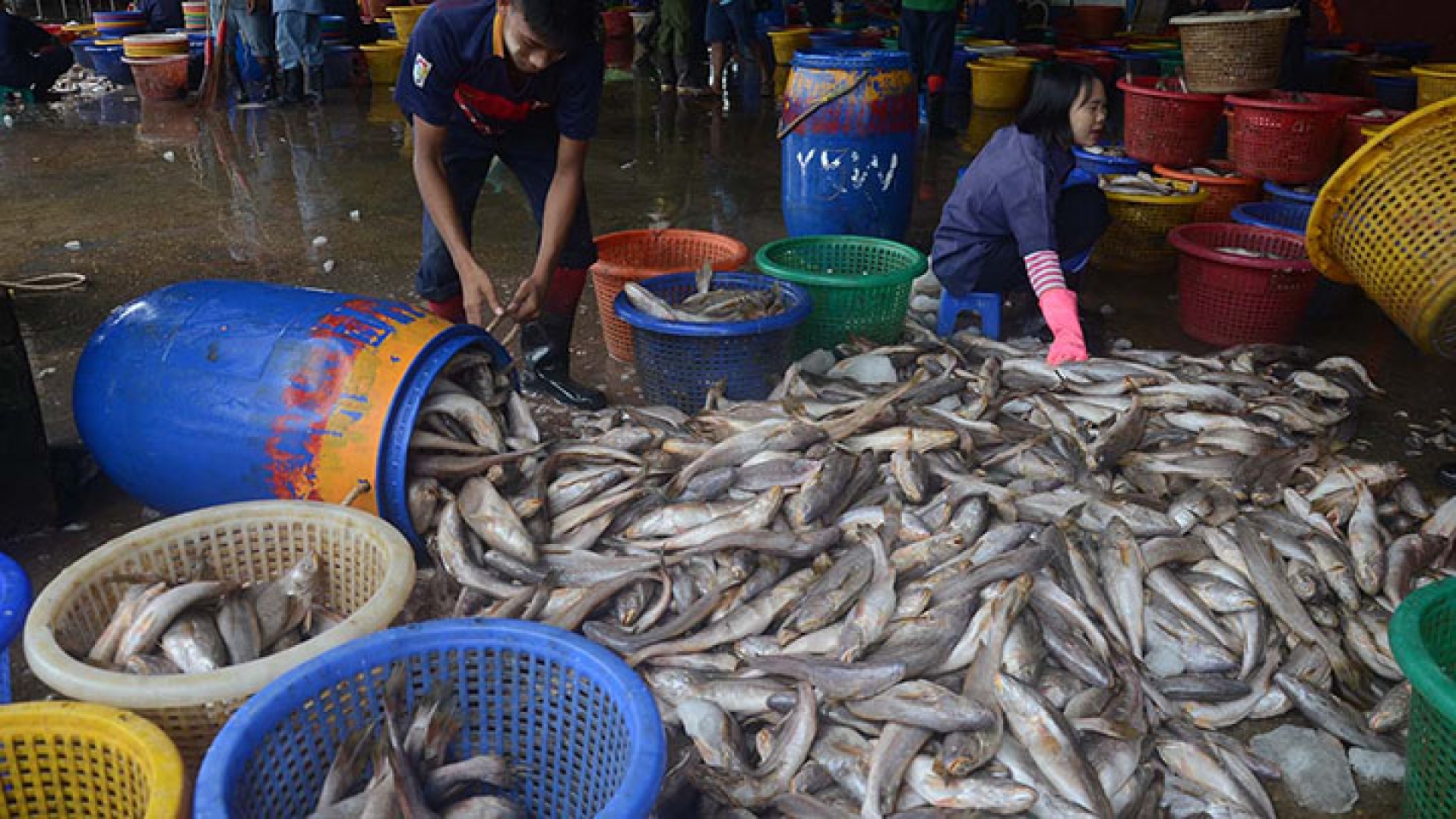
The value of Myanmar’s aquaculture exports as of 10 September 2021 has dropped dramatically to US$742.7 million since 1 October 2020, falling short of $66 million to reach the value recorded during the year-ago period, as per the statistics released by the Ministry of Commerce. Myanmar shipped $808.85 million worth of fishery products to the external market in the corresponding period of the last FY. Myanmar Fisheries Federation (MFF) is attempting to grow fishery export regardless of the COVID-19 disruption on maritime trade, closure of land borders and fuel oil price instability due to Kyat depreciation. Despite the open season of offshore fishing, Myanmar’s fishery export industry is facing a series of challenges such as the oil price hike, surge in container shipping rate, the closure of border posts, disruption on maritime trade and the COVID-19 negative impacts.

Consequently, it will harm the export sector somehow in the long term. “If the border post resumes the trade activity, the trade will go smoothly. The closure of the border posts is triggered by the COVID-19 threats. The cross-border between Myanmar and Bangladesh is still open for trade. The federation is planning to export fishery products to Bangladesh. Myanma Port Authority is also ensuring smooth freight flow with non-stop operation. The federation is attempting to tackle this fishery export hurdles,” said Dr Toe Nanda Tin, senior vice-president of MFF. The price of fish fell by half. The high input cost such as fishing net, oil price posed another burden for the industry, coupled with the devaluation of Kyat in the forex market, Mawlamyine Commodity Centre stated.

The marketable fish products, especially fish, shrimp, eel and crab from Taninthayi and Ayeyawady regions and Rakhine State are primarily exported to foreign markets. The federation is turning to the Bangladesh market with export potentials. MFF is working together with the stockholders in the supply chain to have sustainable export growth. The fishery exports through the Sino-Myanmar border has ground to a halt following the consequences and safety measures on the imported seafood amid the COVID-19 pandemic, traders stressed. Myanmar’s fishery export was experiencing a downturn due to the import restrictions triggered by the detection of the COVID-19 on fish imports in China. Chinese market constitutes about 65 per cent of Myanmar’s fishery exports. China accounted for US$254 million out of overall fishery export value of $850 million in the past financial year 2019-2020. At present, China shut down the border areas in wake of the COVID surge in Myanmar.

Food and Agriculture Organization (FAO) and World Health Organization (WHO) issued guidelines to ensure food safety during the COVID-19 pandemic in April 2020. The permitted companies are advised to carry out food safety plans, follow the guidelines of WHO and FAO, formulate the safety management system and suspend the exports if any suspicious foodborne virus or virus infection risk are found in the products. The export is likely to resume once the products meet food safety criteria set by the General Administration of Customs of the People Republic of China (GACC). Myanmar Fisheries Federation stated that only the G2G pact can tackle problems which faced in the export of farm-raised fish and prawns and ensure smooth freight movement between countries to bolster exports.

During the last FY2019-2020, MFF expected to earn more than $800 million from fishery exports and it reached a target. Myanmar exports fisheries products, such as fish, prawns, and crabs, to markets in 40 countries, including China, Saudi Arabia, the US, Japan, Singapore, Thailand, and countries in the European Union. The MFF is making concerted efforts to increase fishery export earnings by developing fish farms that meet international standards and adopting advanced fishing techniques. To ensure food safety, the foreign market requires suppliers to obtain Hazard Analysis and Critical Control Points (HACCP) and Good Aquaculture Practices (GAqP) certificates. To meet international market standards, fishery products must be sourced only from hatcheries that are compliant with GAqP.

The MFF is working with fish farmers, processors, and the Fisheries Department under the Ministry of Agriculture, Livestock, and Irrigation to develop the GAqP system. Processors can screen fishery products for food safety at ISO-accredited laboratories under the Fisheries Department. There are 480,000 acres of fish and prawn breeding farms across the country and more than 120 cold-storage facilities in Myanmar. Myanmar exported 340,000 tonnes of fishery products worth $530 million in the 2013-2014FY, 330,000 tonnes worth $480 million in the 2014-2015FY, 360,000 tonnes worth $500 million in the 2015-2016FY, 430,000 tonnes worth $600 million in the 2016-2017FY, 560,000 tonnes worth $700 million in the 2017-2018FY and 580,000 tonnes worth over $730 million in the 2018-2019FY respectively, according to the Commerce Ministry.

Source: The Global New Light of Myanmar

Trucks_at_Thai-Myanmar_border_in_Mae_Sot

Myanmar border trade hits over $9.13 bln this FY

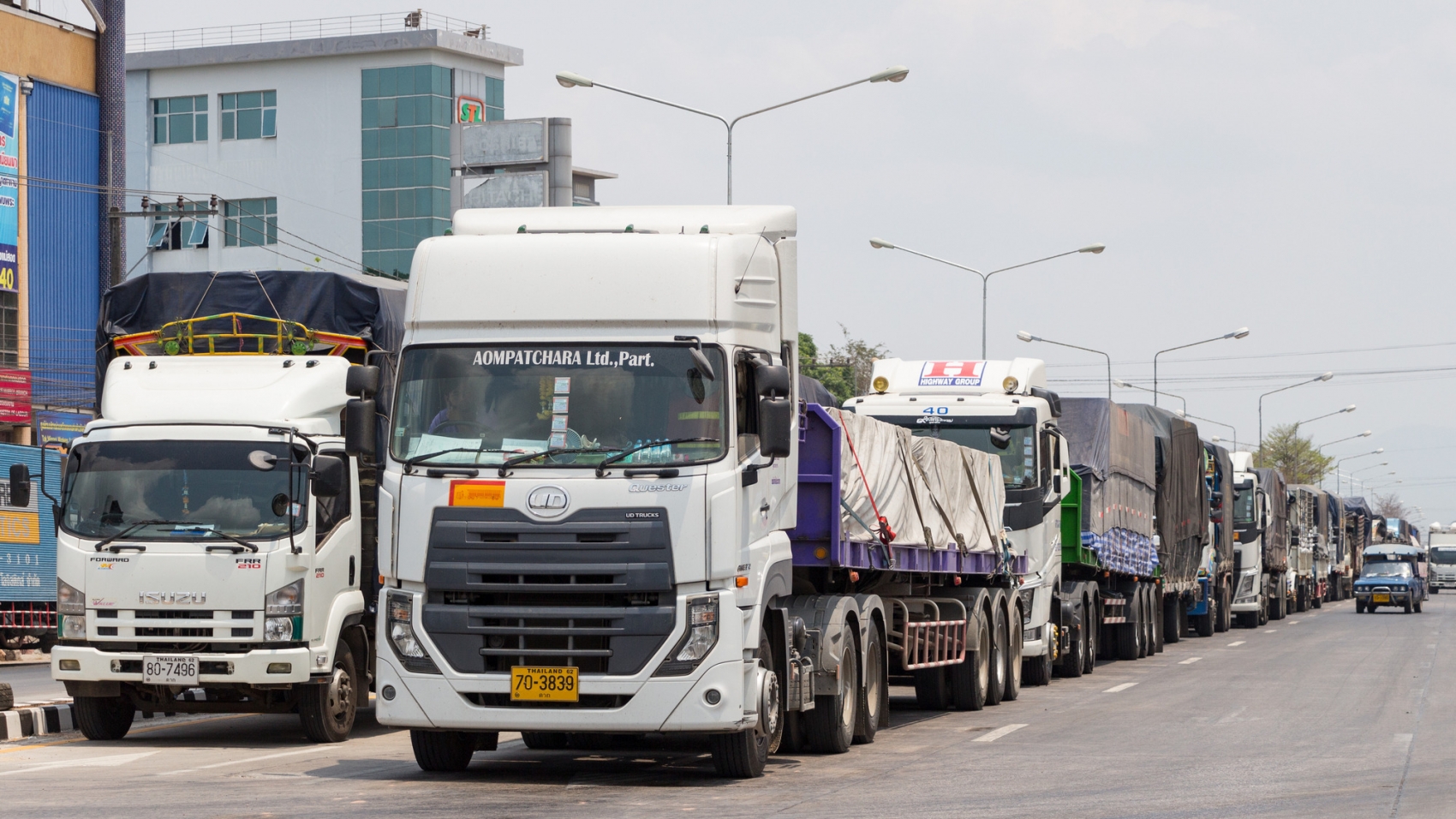
Myanmar’s border trade hit over US$ 9.13 billion in the financial year 2020-21, down over $1.32 billion compared with that of the same period of last FY, according to figures released by the Ministry of Commerce. Border trade with Bangladesh, India, Thailand and China has declined compared to the last FY.

During the period, the country’s export via land borders amounted to $5.9 billion while its import shared $3.16 billion. This FY’ border trade decreased by over $1.32 billion compared to the same period of last FY when it amounted to $10.45 billion, the ministry’s figures said. Muse topped the list of border checkpoints with the most trade value of $3.6 billion, followed by Myawady with $1.8 billion.

The country conducts border trade with neighbouring China through Muse, Lweje, Kampaiti Chinshwehaw and Kengtung crossings, with Thailand via Tachilek, Myawady, Kawthoung, Myeik, Hteekhee, Mawtaung and Meisei checkpoints, with Bangladesh via Sittway and Maungtaw and with India through Tamu and Reed border posts, respectively. Myanmar’s major export items are farm, animal, marine, forest, mining, CMP and other products. Myanmar mainly im ports capital goods, industrial raw materials, personal goods and CMP raw materials.

Source: The Global New Light of Myanmar
13552-mae_sot

Myanmar-Thailand bilateral border trade tops $3.7 bln this FY

Bilateral border trade between Myanmar and Thailand reached over US$3.7 billion as of 10 September in the present financial year 2020-2021 which started in October, the Ministry of Commerce’s trade data showed. The country’s export to Thailand totalled $2.44 billion while its import shared $1.29 billion during the period. This budget year’s figures decreased by $95 million, compared to the same period in the last fiscal year.

Myanmar mainly conducts border trade with neighbouring Thailand through seven border checkpoints—Tachilek, Myawady, Kawthoung, Myeik, Hteekhee, Mawtaung and Meisei gates. During the period, Myawady border gate topped with $1.79 billion trade. The country’s agricultural and fishery products are exported to Thailand while cosmetics, food products and machinery and raw industrial goods such as cement and fertilizers are imported.

The bilateral trade between Myanmar and Thailand stood at $3.7 billion in FY2020-2021 (as of September), $5.1 billion in FY2019- 2020, $5.5 billion in FY2018-2019, $2.9 billion in the mini-budget year of 2018 or transitional period from April to September this year, $5 billion in FY2017-2018, $4.3 billion in the 2016-2017FY, $4.8 billion in the 2015-2016FY, $5.7 billion in the 2014-2015FY, $5.6 billion in the 2013-2014FY, $4.7 billion in the 2012-2013FY, and $4.5 billion in the 2011-2012FY, according to the Myanmar Ministry of Commerce.

Source: The Global New Light of Myanmar

goods-at-port

Myanmar’s bilateral trade with Germany reaches $460 mln in past ten months

The value of trade between Myanmar and Germany from October to July of the current financial year 2020-2021 exceeded US$460 million, according to data of the Ministry of Commerce. Myanmar’s export to Germany surpassed its import, with $349.882 million worth of export and $110.79 million valued import, according to the statistics released by the Ministry of Commerce. Beyond the regional trade regime, Myanmar has established trade links with EU members.

Germany is the biggest trade partner of Myanmar in European Union, followed by Spain. The main export items are rice, pulses, tea leaf, coffee, garments on a Cut-Make-Pack basis and fisheries. Meanwhile, machinery, data-processing equipment, electrical and optical goods, chemical products, motor vehicles and parts and pharmaceutical products, cosmetics, food and beverages and consumer goods are imported into Myanmar.

Myanmar reinstated the EU’s Generalized Scheme of Preference starting from 19th July 2013. Myanmar can enjoy GSP for the export of fisheries, rice, pulses, agro products, bamboo and rattan finished products, forestry products, apparel and finished industrial goods. Trade value with Germany was registered at $823.7 million in the last FY 2019-2020, $821.5 million in the FY 2018-2019, $373 million in the past mini-budget period (April-September 2018), $584 million in 2017-2018 FY, $342 million in 2016-2017 FY and $153 million in FY 2015-16, respectively.

Source: The Global New Light of Myanmar
7-story-1_0

Myanmar ships over 2.2 mln tonnes of corn to international trade partners this FY

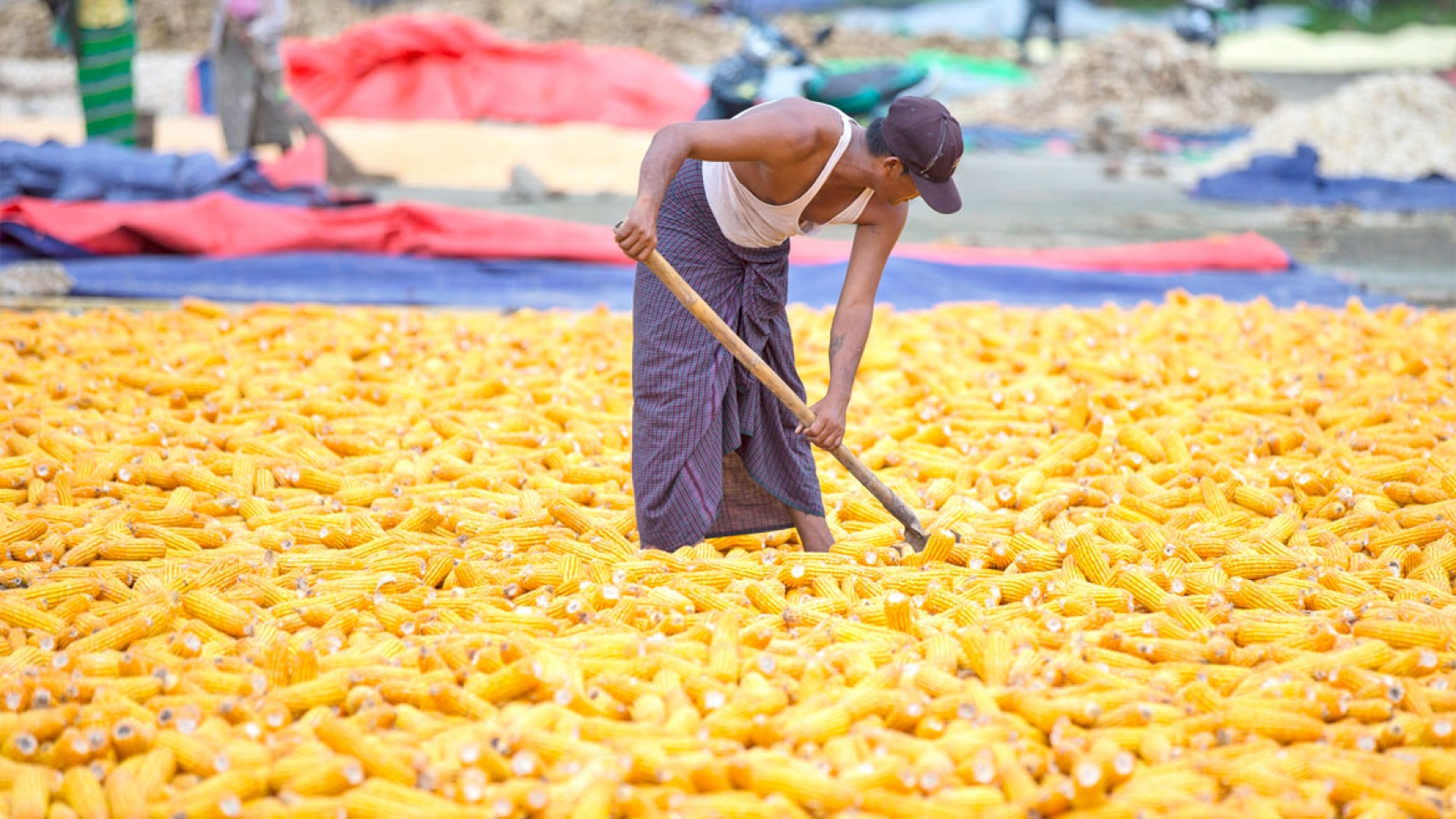
Myanmar has exported more than 2.2 million tonnes of corn to foreign countries in the current financial year 2020-2021, said U Min Khaing, the chair of the Myanmar Corn Industrial Association said. Of 2.2 million tonnes, about 1.6 million tonnes of corn were delivered to Thailand, whereas the remaining corns were conveyed to China, India and Viet Nam. This year, the corn fetched a good price of US$260-270 per tonne.

It was priced only $200-230 per tonne during the year-ago period. Thailand gives the green light to corn imports through Maesot under zero tariff (with Form-D), between 1 February and 31 August. Thailand has granted tax exemption on corn imports between February and August. However, Thailand imposed a maximum tax rate of 73 per cent on corn import to protect the rights of their growers if the corn is imported during the corn season of Thailand.

During the last FY2019-2020, the country exported 2.2 million tonnes of corns to the external market, with an estimated value of $360 million, the Ministry of Commerce’s data showed. Myanmar is the second-largest exporter of corn among regional countries. At present, corn is cultivated in Shan, Kachin, Kayah and Kayin states and Mandalay, Sagaing and Magway regions. The country yearly produces 2.5-3 million tonnes of corn.

Source: The Global New Light of Myanmar
13-import-export

According to the export / import route within four months, there were 49.62% of exports by sea, nearly 31% by land, 3% by air and more than 76% of import by sea

According to the export / import route within four months, there were 49.62% of exports, nearly 31 percent by land, 3 percent by air and more than 76 percent of import by sea, according to the Ministry of Planning and Finance. It is known that 58% of exports in one year are by sea; Nearly 18% by land, almost 4% by air and almost 80% by import by sea based on the export/import route, according to the Ministry of Planning and Finance. In the export / import route, from October to September of the 2019-2020 fiscal year, exports were 18.46% by land; 58% by sea; 3.71% by air and 19.83% by gas pipeline, according to the Export / Import Statistics Team.

From October to September of the 2019-2020 fiscal year, the imports were 16.54% by land, 78.95 % by sea and 4.51% by air. As of January of the 2020-2021 fiscal year, China was the largest importer of Myanmar with over US $ 2024 million; Singapore is worth more than $ 990 million and Thailand more than $ 700 million, according to the Ministry of Commerce. In the four months to January of the 2020-2021 fiscal year, the largest imports to Myanmar were from China at $ 2,024.80 million; $ 990.90 million from Singapore; $ 700.46 million from Thailand; 368.98 million from Indonesia; $ 358.41 million from Malaysia; $ 229.32 million from India; $ 179.60 million from South Korea; $ 158.88 million from Japan; Vietnam imported $ 158.61 million and the United States $ 96.28 million, according to the Ministry of Commerce.

In the four months to January of the 2020-2021 fiscal year, China topped the list of Myanmar’s top 10 exporters with $ 2,275.54 million, followed by Thailand with $ 919.72 million, $ 341.70 million to Japan; $ 309.59 million to India; $ 263.23 million to the United States; $ 157.57 million to Spain; $ 142.91 million to Germany; $ 140.85 million to the UK; $ 116.361 million to South Korea; It exported $ 112.93 million to the Netherlands, according to the Ministry of Commerce. The main priority areas of the National Export Strategy 2020-2025 are agro-based food production; Textile and clothing sector; Industry and electronics; Fisheries sector; Forest products; Digital products and services; Logistics services; Quality management sector; Trade Information Services and innovation and entrepreneurship.

Source: Daily Eleven

trade-between-myanmar-and-foreign-countries-reaches

Myanmar’s foreign trade value drops by $7.39 bln this FY

Myanmar’s foreign trade value hit over US$27.151 billion till 3 September in the current financial year 2020-21, declining by $7.39 billion when compared to the same period of last FY, according to the Ministry of Commerce. The foreign trade value was $27.151 billion from 1 October 2020 to 3 September 2021, while the previous FY saw over $34.55 billion in the same period. During these periods, there was a decline of over $7.39 billion.

During 10 months of this FY, China topped the list of the 10 Myanmar’s exported countries with $4,408.30 million, followed by Thailand with $2,548.12 million, the Ministry’s figures said. In 2019-2020 FY, Myanmar exported goods worth US$3,985.06 million to China, US$2,091.81 million to Thailand, US$673.87 million to Japan, US$485.50 million to India, US$434.67 million to the US, US$261.71 million to Germany, US$245.75 million to the UK, US$233.48 million to Spain, US$203.72 million to the Netherlands and US$198.29 million to South Korea, according to the data from the commerce ministry.

The value of Myanmar’s trade with China through maritime and sea trade channels totalled over $12.13 billion in October and September of the 2019-2020 financial year, including $5.4 billion worth of exports and $6.7 billion for imports, according to data released by the Ministry of Commerce. China is Myanmar’ largest trading partner and its second-largest source of investment. Business centres will be established in Myanmar and China to promote trade and investment, according to the Ministry.

Source: The Global New Light of Myanmar
(2)_4

Japan ranks Myanmar third-largest export country this FY

The value of trade between Myanmar and its development partner Japan exceeded over $1.049 billion in the current FY and Japan is placed as Myanmar’s third-largest export partner, the Ministry of Commerce’s data showed. Myanmar’s exports to Japan in the past ten months (October-July) of the current financial year 2020-2021 touched about US$768 million while import was valued at only $281.4 million, according to the data of the Ministry of Commerce.

Myanmar’s export items to Japan are garments, marine products, rice, black sesame, green gram, rubber and other products. In return, it imported machines and machine equipment, electronic equipment, fertilizers, chemical products, medicines, automobiles, and other products. Bilateral trade values have registered $1.92 billion in the last FY2019-2020, $1.89 billion in the FY2018-2019, $1 billion in the 2018 mini-budget period, $1.92 billion in the 2017-2018FY, $2 billion in the 2016-2017FY and $1.84 billion in the 2015-16FY, respectively.

This FY, three enterprises from Japan were approved to make initial investments of $518 million into the country, according to the data of the Directorate of Investment and Company Administration (DICA). Japan has made up over 34.7 per cent of total FDI in the Thilawa Special Economic Zone. The Japan International Cooperation Agency (JICA) offers loans such as ODA loans and two-step loans intending to bring about socio-economic development in Myanmar.

Source: The Global New Light of Myanmar